Delivery Driver Injury Claims in 2026: What Injured Workers Need to Know
Delivery driver injury claims are becoming more important in 2026 because delivery work is everywhere. E-commerce, same-day shipping, grocery delivery, restaurant apps, pharmacy drop-offs, and local courier services have made delivery driving a normal part of modern life. That growth has also increased legal questions after crashes, falls, lifting injuries, and other on-the-job incidents. When a delivery driver gets hurt, the case may involve workers’ compensation, a third-party personal injury claim, or both.
This is exactly why delivery driver injury claims are a strong topic for PI-Pedia. These cases sit at the intersection of roadway negligence, workplace injury law, and premises liability. They also connect naturally to your existing guides on what to do after a car accident, comparative negligence in car accident cases, workers’ compensation vs. personal injury lawsuits, property owner duty of care, and slip and fall accidents proving negligence.
Why Delivery Driver Injury Claims Are Getting More Attention
Delivery work has always carried risk, but the pressure is different now. More stops, tighter route expectations, app-based dispatch systems, dense traffic, distracted drivers, poor parking conditions, apartment access problems, bad weather, and rushed drop-offs all add to the injury picture. A delivery worker may be injured on the road, on a customer’s property, in a warehouse, at a loading dock, or while lifting and carrying heavy packages all day.
That means these cases do not fit neatly into one legal box. A van crash may look like a car accident case. A fall on icy steps may look like a premises liability case. A back injury from loading repeated packages may fall primarily under workers’ compensation. In some situations, one incident can create multiple legal paths at the same time.
Common Types of Delivery Driver Accidents
1. Traffic Collisions During Deliveries
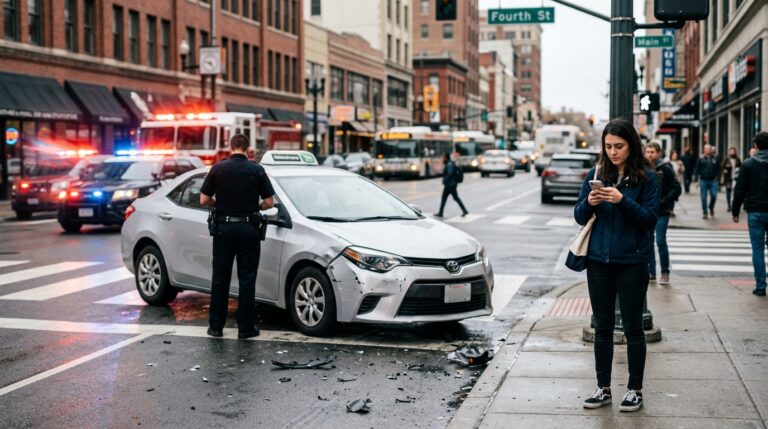
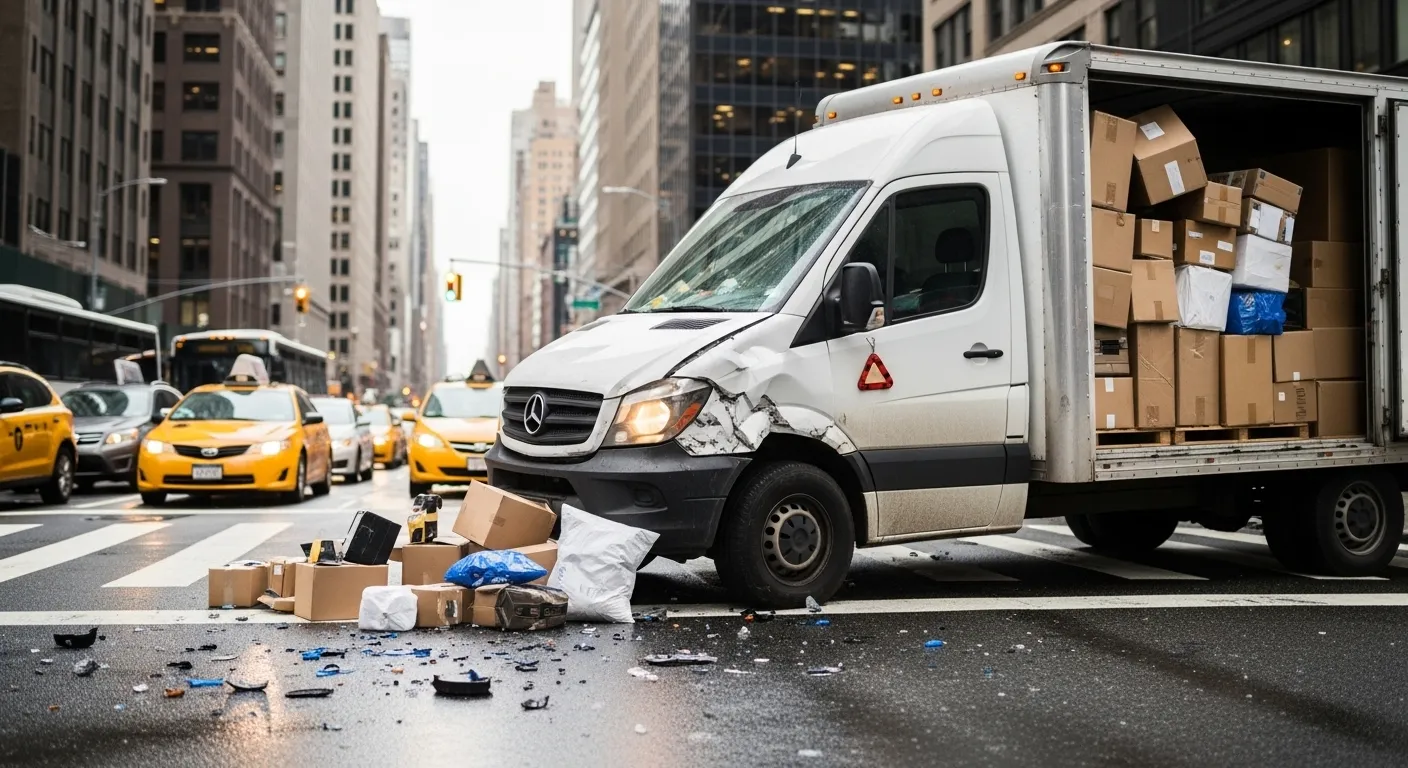
The most obvious delivery injury cases involve roadway crashes. A delivery driver may be rear-ended, struck in an intersection, sideswiped during a lane change, or hit by a distracted driver while stopping along a route. Because delivery work often involves frequent starts, stops, turns, backing, and navigation through crowded streets, these drivers face constant exposure to negligent motorists.
If another driver caused the collision, the injured worker may have a third-party personal injury claim in addition to any workers’ compensation rights. That is one reason it helps to understand the basics in What to Do After a Car Accident: Legal & Medical Guide.
2. Backing, Parking, and Loading Zone Incidents
Delivery drivers are often injured in awkward environments rather than at highway speeds. Parking lot impacts, reversing accidents, curb strikes, loading dock mishaps, and low-speed collisions near apartment complexes or businesses can still cause serious harm. Neck injuries, shoulder trauma, knee damage, and concussions can all happen in lower-speed incidents.
3. Slip, Trip, and Fall Injuries
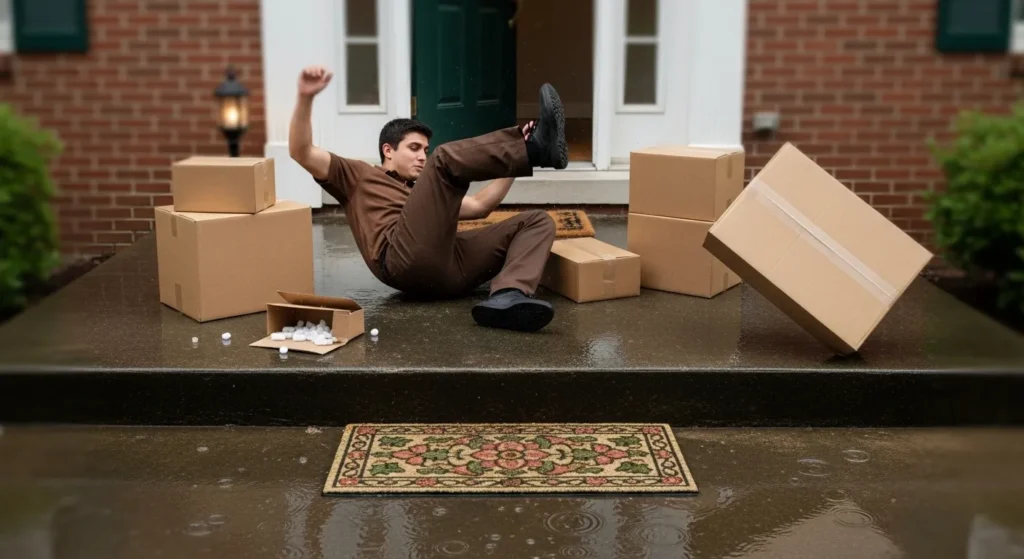
Not every delivery injury involves a vehicle. Many claims arise because the driver leaves the vehicle and walks into a dangerous condition. Wet entryways, broken stairs, poor lighting, uneven sidewalks, icy porches, loose mats, and cluttered commercial back entrances can all lead to serious falls. When that happens, the claim may involve the legal principles discussed in Property Owner Duty of Care Explained and Slip and Fall Accidents: Proving Negligence.
4. Lifting and Repetitive Motion Injuries
Delivery drivers do not just drive. They lift, carry, push, pull, climb, and repeat the same motions all day. Heavy boxes, awkward package shapes, repeated stair climbs, and rushed loading tasks can lead to back strains, shoulder tears, hernias, knee injuries, and other musculoskeletal damage. These cases often fall under workers’ compensation, but the exact facts still matter.
5. Dog Attacks and Property-Related Incidents
Some delivery drivers are injured by animals, defective gates, unsecured hazards, or dangerous access routes on private property. A dog bite case, for example, may involve both premises issues and state-specific animal liability rules. Likewise, a driver injured by collapsing steps or a hidden hole in a walkway may have a claim against a property owner or manager.
Who May Be Liable in Delivery Driver Injury Claims?
One of the first questions in delivery driver injury claims is whether the injury is purely a workers’ compensation matter or whether another party can also be sued. Possible responsible parties may include:
- A negligent third-party driver who caused a roadway crash
- A property owner who failed to maintain safe conditions
- A business or apartment complex that created a dangerous delivery area
- A vehicle manufacturer if a defect contributed to the injury
- A contractor or maintenance provider who left a hazard uncorrected
- An employer, depending on the claim type and the law that applies
In many cases, fault is not one-sided. That is where shared-fault issues can become important. If the defense claims the delivery driver was rushing, distracted, parked unsafely, or ignored a warning sign, the same general principles discussed in Understanding Comparative Negligence in Car Accident Cases may affect the value of the claim.
Workers’ Compensation vs. Third-Party Injury Lawsuits
This is one of the most misunderstood parts of delivery injury law. If a delivery driver is hurt while working, workers’ compensation may cover medical treatment and partial wage loss regardless of fault. But workers’ compensation usually does not provide pain and suffering damages. That is why third-party claims matter so much.
For example, if a courier is hit by another driver while making deliveries, workers’ compensation may apply because the worker was on the job. At the same time, the injured worker may also have a personal injury claim against the at-fault driver. If a driver slips on unsafe steps at a customer’s property, there may be both a workplace-related injury issue and a premises liability claim.
This overlap is exactly why readers should also review Workers’ Compensation vs. Personal Injury Lawsuits: Key Differences Explained.
Evidence That Can Make or Break the Case
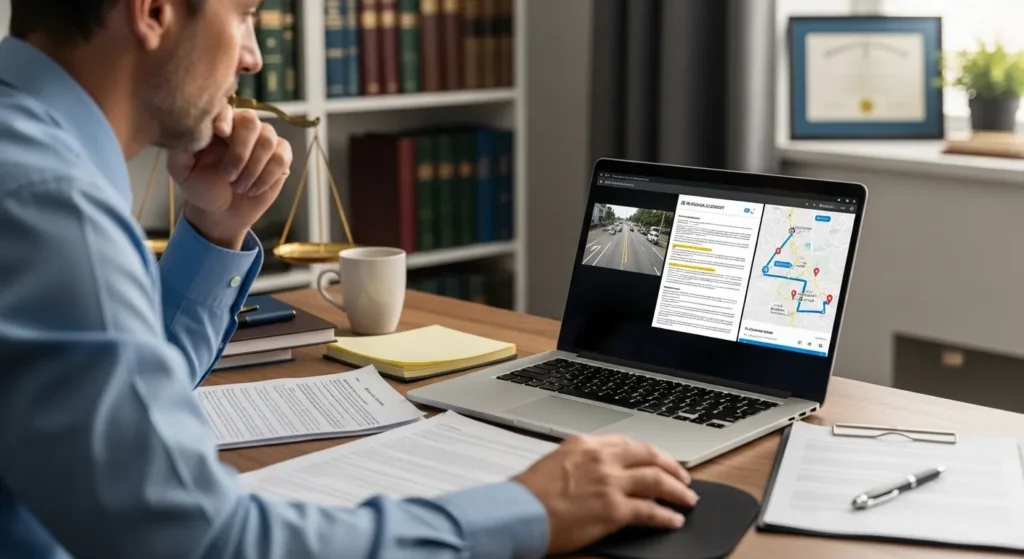
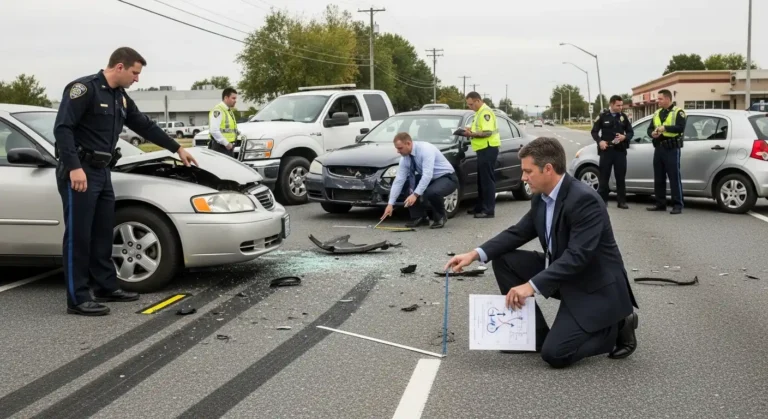
Strong evidence matters in all personal injury claims, but it is especially important in delivery cases because multiple parties may point fingers at each other. Useful evidence often includes:
- Crash reports or incident reports
- Scene photos and videos
- Vehicle damage and package-location photos
- App data, route logs, timestamps, and delivery records
- Witness names and contact information
- Bodycam, dashcam, doorbell, or surveillance footage
- Medical records linking the injuries to the incident
- Employment records showing the worker was on duty
- Maintenance records for vehicles or property conditions
Delivery work creates digital evidence that does not exist in every case. Route apps, dispatch messages, stop confirmations, customer notes, GPS history, and timing logs may help prove where the worker was, what they were doing, and whether they were acting within the scope of their job when the injury happened.
What Compensation May Be Available?
The answer depends on the legal route. In a workers’ compensation claim, benefits may include medical treatment, wage replacement, and disability-related benefits. In a third-party personal injury lawsuit, damages may be broader and can include:
- Emergency care and ongoing medical bills
- Lost income and reduced future earning ability
- Rehabilitation costs
- Pain and suffering
- Emotional distress
- Permanent impairment or disability
- Out-of-pocket costs tied to recovery
The seriousness of delivery-related injuries is often underestimated early in the case. A sore back may later become a disc injury. A “minor” crash may lead to chronic neck pain or a concussion. A fall on a poorly maintained walkway may produce a fracture that keeps the worker off the job for months.
What an Injured Delivery Driver Should Do Right Away
- Get medical treatment immediately, even if symptoms seem minor.
- Report the incident to the employer or dispatch platform as soon as possible.
- Call police or property management when appropriate.
- Take photos of vehicles, hazards, weather, lighting, and the surrounding area.
- Preserve app screenshots, route details, texts, and delivery records.
- Collect witness information before people leave.
- Avoid casual statements that sound like an admission of fault.
- Review whether the claim may involve both workers’ compensation and a third-party case.
Early documentation matters because delivery scenes change quickly. Vehicles move, packages get delivered, weather conditions shift, surveillance footage gets deleted, and platforms may not keep every record forever.