
Slip and Fall Accidents in Retail Stores: Proving Liability After Spills and Wet Floors
Retail store slip and fall accidents are one of the most common types of premises liability claims because stores invite the public inside every day and are expected to keep walking areas reasonably safe. Grocery stores, supermarkets, big box retailers, pharmacies, convenience stores, warehouse clubs, and department stores all deal with the same basic problem: people move quickly through aisles while employees stock shelves, mop floors, restock coolers, handle spills, and manage heavy foot traffic. When the floor is not kept safe, a routine shopping trip can turn into a serious injury claim.
These cases matter because the danger is usually simple. A puddle near a freezer, tracked-in rainwater near the entrance, a leaking refrigeration unit, a recently mopped aisle without proper warning, a loose floor mat, or dropped produce in a grocery section can all create the kind of hazard that sends someone to the emergency room. CDC/NIOSH lists spills, greasy floors, ice, snow and rain, and loose mats or rugs among common causes of slips, trips, and falls, and OSHA’s walking-working surfaces rule requires surfaces to be kept free of hazards such as leaks, spills, snow, and ice. External reference. External reference.
For PI-Pedia, this is a strong topic because it stays tightly inside the Slip, Trip & Premises Liability category while connecting naturally to your broader injury-law content. It also creates a useful bridge to posts involving commercial-property hazards and customer or delivery-related falls. Your site already has relevant cluster support through articles such as Delivery Driver Injury Claims in 2026, which discusses unsafe steps, wet entryways, poor lighting, and other dangerous property conditions.
Why Retail Store Slip and Fall Accidents Happen So Often
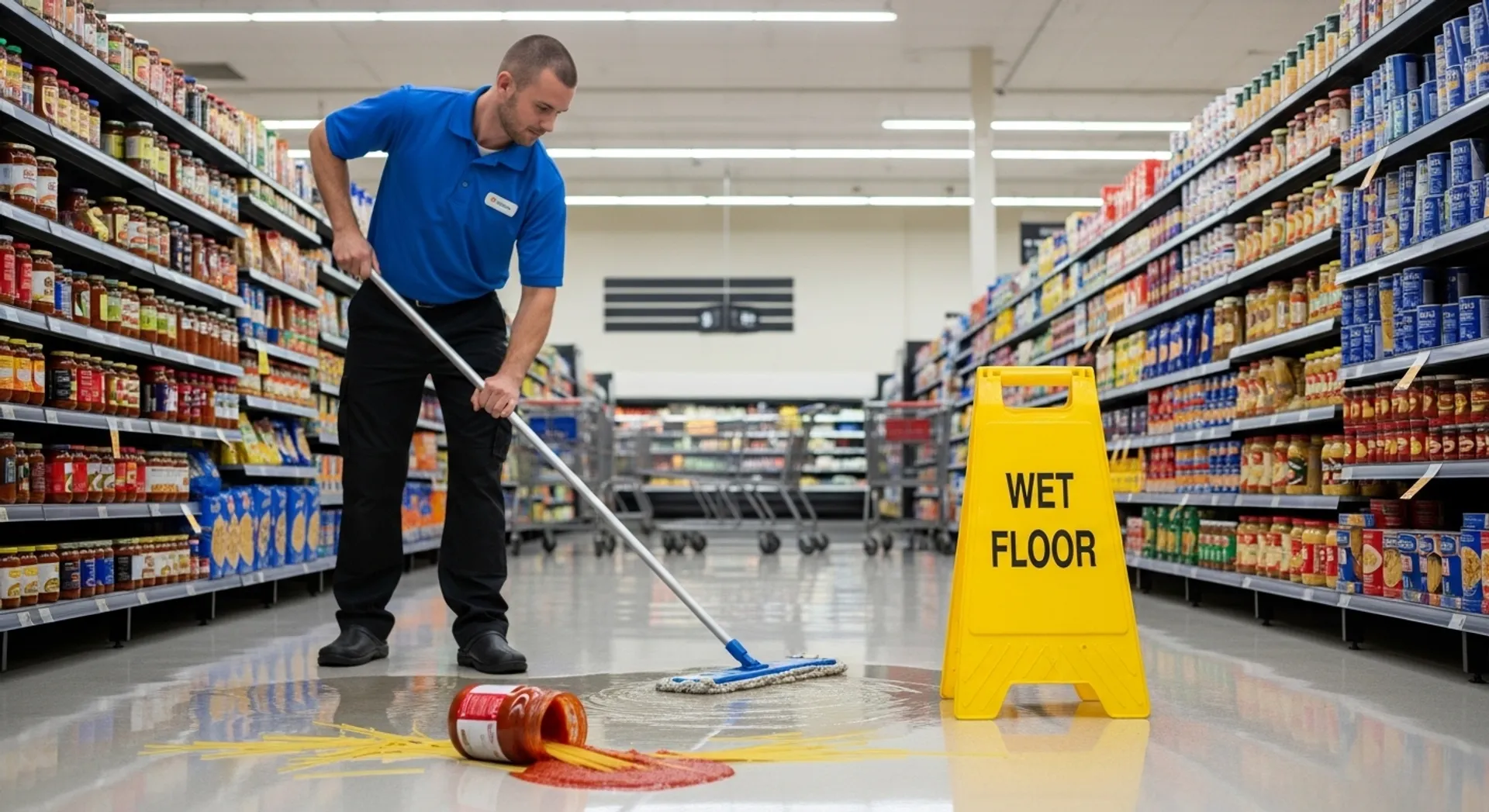
Retail stores are built for constant movement. Customers push carts, carry baskets, stop suddenly, turn corners, reach for products, and walk through entry areas that are exposed to weather. Employees stock shelves, clean surfaces, move pallets, and work under time pressure. That environment creates predictable floor hazards, and predictability matters because stores are generally expected to inspect for and address conditions that can injure customers.
Common store hazards that lead to slip injuries
Some hazards are obvious and some are not. A large puddle in the middle of an aisle may be easy to spot. A clear liquid on a polished floor is much harder to see. A black floor mat that curls slightly at the edge may look harmless until someone’s shoe catches it. Water tracked in from a rainy parking lot can make the entrance area slippery long before an employee gets a mop or sign in place. NIOSH specifically identifies slips, trips, and falls as common causes of injuries in retail stores and warns about cluttered or obstructed walkways.
Spills and leaking equipment create immediate danger
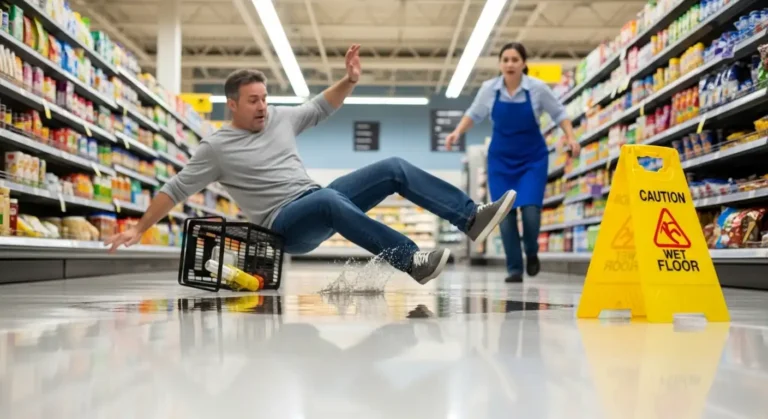
Retail stores often sell drinks, frozen goods, produce, and refrigerated items. That means spills are part of daily operations. The legal problem begins when the spill is not cleaned within a reasonable time, when staff fail to block off the area, or when leaking equipment is left unaddressed. A leaking freezer or cooler can create a recurring hazard, which may strengthen an injured person’s argument that the store knew or should have known about the condition.
Entrance areas become risky during bad weather
Rain and tracked-in moisture are not rare surprises. They are predictable conditions. A store that knows customers will enter with wet shoes may need mats, warning signs, inspections, and timely cleanup to reduce the risk. That matters because a defense often argues that rainwater is “open and obvious,” but obviousness does not automatically excuse a business from taking reasonable safety steps when the condition is recurring and foreseeable.
Not every fall is automatically the store’s fault
That part matters. A person can fall in a store and still lose the case. The claim usually depends on proving that the store created the hazard, knew about it, or should have discovered it through reasonable inspection. If a spill happened only seconds before the fall, the store may argue there was no fair opportunity to fix it. If surveillance shows the customer was running, distracted, or ignored a visible warning sign, the store may also argue shared fault.
That is where internal context helps. PI-Pedia already covers fault-sharing concepts in Understanding Comparative Negligence in Car Accident Cases. The same general idea can help readers understand why a store may still defend a slip case by arguing the injured person was partly responsible.
How to Prove Liability in a Retail Store Slip and Fall Claim
Strong retail store slip and fall cases are built on evidence, not assumptions. The injured person has to prove more than “I fell in the store.” The core issue is whether the business failed to use reasonable care in keeping the premises safe. In practice, that usually means showing the hazard existed long enough to be discovered, that employees knew about it, or that store policies were not followed.
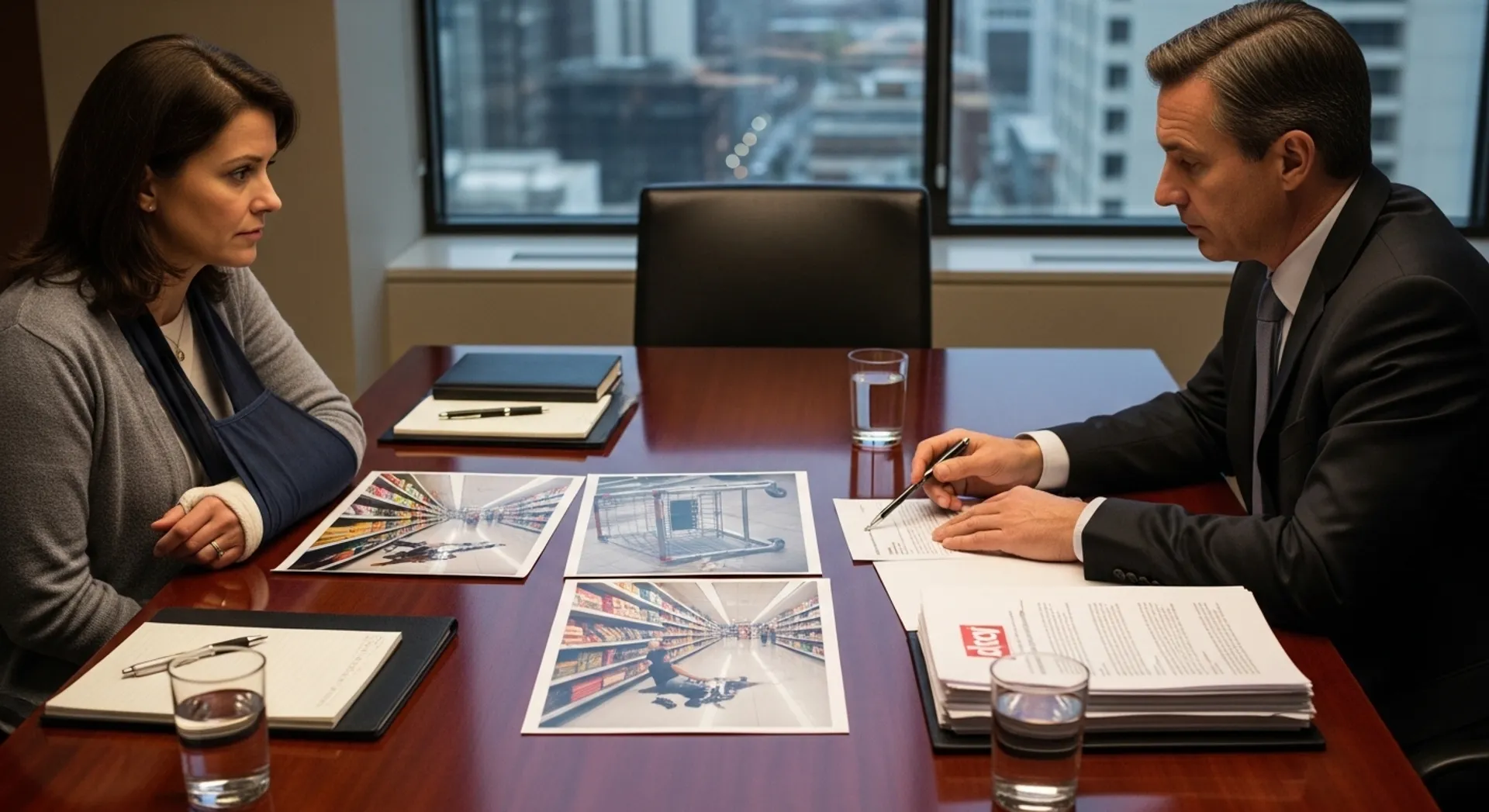
What evidence matters most after the fall
The best evidence is usually collected immediately. That includes photos of the exact floor condition, close-up photos of the spill or hazard, wide shots showing the surrounding area, witness names, incident reports, medical documentation, and the type of footwear the person was wearing. If there are warning signs, mats, cones, or cleaning tools nearby, they should be photographed too. In many retail cases, surveillance footage is one of the most important pieces of evidence because it may show how long the condition existed and whether employees walked past it before the accident.
Incident reports and surveillance footage can make or break the case
Many injured people leave the store without asking for a written incident report. That is a mistake. A report creates a time-stamped record that the event happened. Surveillance footage matters even more. If the video shows a spill sitting for twenty minutes while employees ignore it, that can be powerful evidence. If it shows the liquid was dropped seconds before the fall, the store’s defense gets stronger. Either way, preserving the video early is critical because many businesses overwrite footage quickly.
Medical records still drive the value of the claim
Liability is only half the case. Damages still matter. A retail store fall can cause wrist fractures, hip fractures, back injuries, head trauma, knee damage, shoulder injuries, and soft-tissue injuries. Medical records help connect the fall to the injury and help prove the severity of the harm. Delayed treatment gives insurers room to argue that the injuries were minor or unrelated. The same basic documentation logic appears in your article What to Do After a Car Accident: Legal & Medical Guide, and it applies here too even though this is a premises case instead of a crash case.
What compensation may be available
If liability is proven, compensation may include emergency treatment, hospital bills, diagnostic imaging, physical therapy, lost income, future medical care, pain and suffering, and reduced quality of life. Serious falls can be underestimated early, especially when the person initially thinks they are just sore. A slip in a grocery or retail store can turn into a torn ligament, herniated disc, concussion, or surgery case. Older adults may face even more severe consequences from the same-level fall because a hip or wrist fracture can affect mobility for months.
Retail slip and fall cases also matter because they are preventable. CPSC remains involved in flooring slip, trip, and fall standards, which reflects how serious walkway traction and floor-safety issues remain. External reference. That does not mean every slick floor creates automatic liability, but it does reinforce the larger point: safe walking surfaces are not optional in public-facing businesses.
What injured shoppers should do right away
Anyone hurt in a store should report the incident immediately, request an incident report, photograph the hazard, identify witnesses, keep the shoes and clothing worn during the fall, and seek medical treatment as soon as possible. They should also avoid casual statements like “I’m fine” if they are not actually fine. The scene changes fast. Spills get cleaned, mats get moved, warning signs appear after the fact, and video can disappear. Early evidence is usually the difference between a weak claim and a strong one.
Bottom line: retail store slip and fall accidents are not minor just because they happen at ground level. These cases turn on whether the store acted reasonably in preventing and responding to known floor hazards. When the evidence shows the business ignored a spill, failed to inspect, or let a dangerous condition remain in place, the injured customer may have a strong premises liability claim.