Automatic Emergency Braking Accident Claims in 2026: When Safety Technology Fails
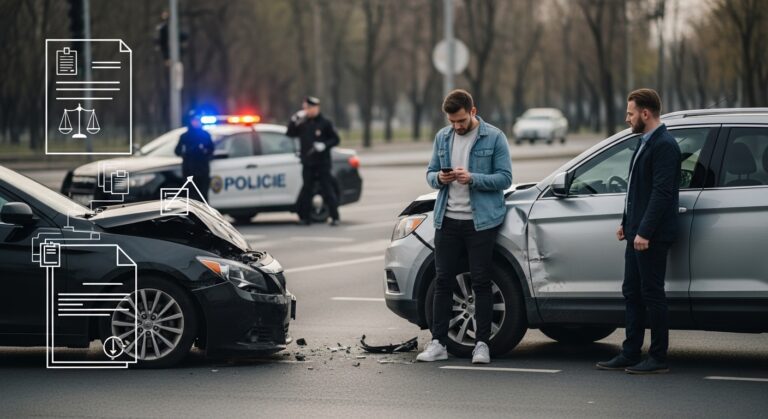
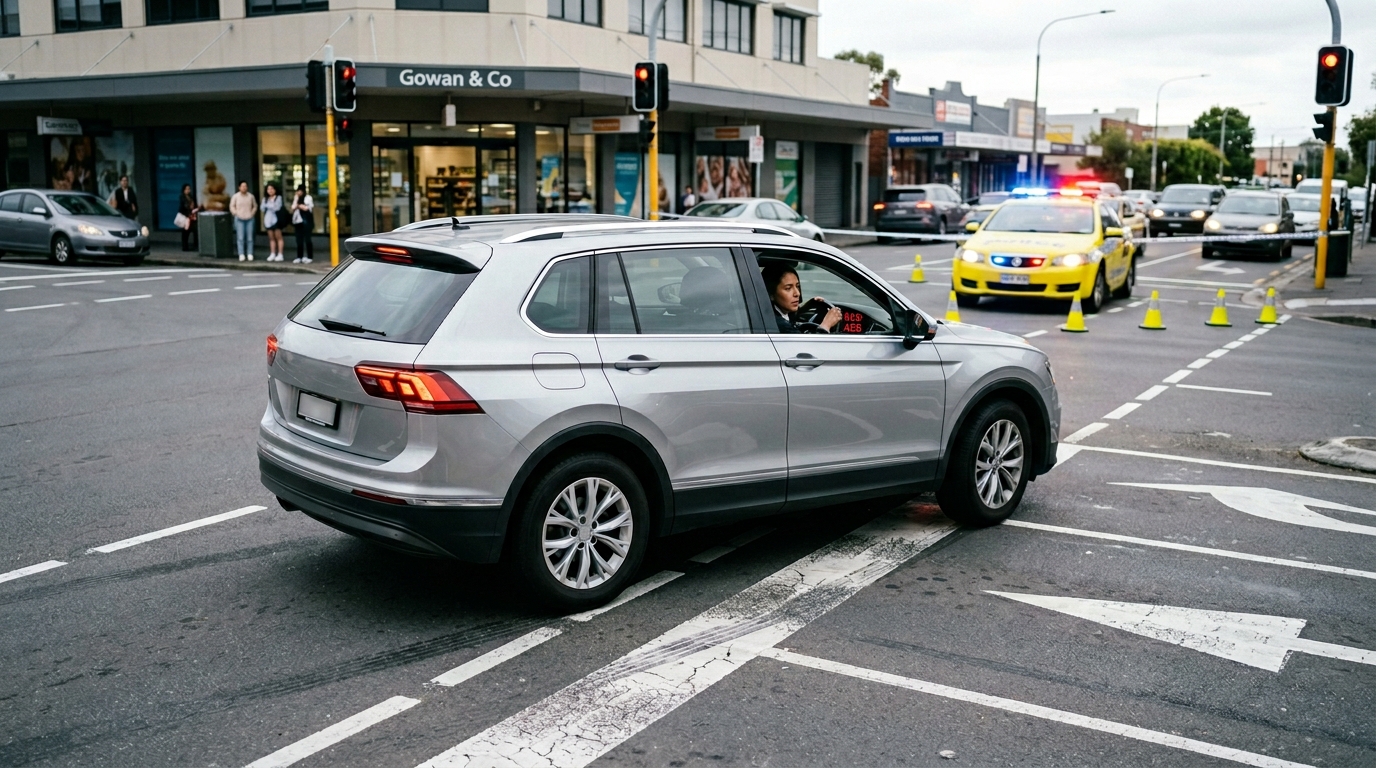
Automatic emergency braking accident claims are becoming more important in 2026 because modern vehicles now rely on advanced safety systems that many drivers do not fully understand. Automatic emergency braking, often called AEB, is designed to detect a possible crash and apply the brakes when the driver does not respond in time. In theory, this technology can reduce rear-end collisions, pedestrian crashes, and serious roadway injuries. In real life, the legal questions are more complicated.
When a crash happens, injured victims may assume the vehicle should have stopped itself. Insurance companies may argue the driver was still responsible. A manufacturer may point to road conditions, sensor limits, driver misuse, or maintenance issues. The truth usually depends on evidence. Was the system active? Did it detect the hazard? Did it warn the driver? The driver brake? The vehicle brake late, not at all, or suddenly without a clear reason?
This topic fits PI-Pedia because automatic emergency braking accident claims connect directly with modern vehicle accident law. These cases may overlap with hands-free driving accident claims, black box accident evidence, and distracted driving accident claims. The main difference is that AEB claims focus on crash-prevention technology and whether that technology worked as expected.
Why Automatic Emergency Braking Accident Claims Are Trending In 2026
Vehicle safety technology is no longer limited to luxury cars. Many newer vehicles now include forward collision warning, automatic emergency braking, pedestrian detection, adaptive cruise control, lane assistance, and driver-monitoring features. These systems can create helpful evidence after a crash, but they can also create false confidence before one.
Drivers may believe automatic braking will always prevent a collision. That belief is risky. AEB systems have limits. They may perform differently at night, in rain, around sharp curves, near construction zones, on poorly marked roads, or when a stopped vehicle appears suddenly. Some systems may detect vehicles better than pedestrians or cyclists. Others may struggle with unusual angles, glare, dirty sensors, damaged cameras, or poor maintenance.
The rise of safety technology also changes how injury claims are investigated. A normal rear-end crash may once have focused mainly on driver attention and following distance. In 2026, that same crash may require a review of vehicle data, system warnings, software updates, recall history, repair records, dashcam footage, and event data recorder information.
AEB can reduce crashes, but it does not replace the driver
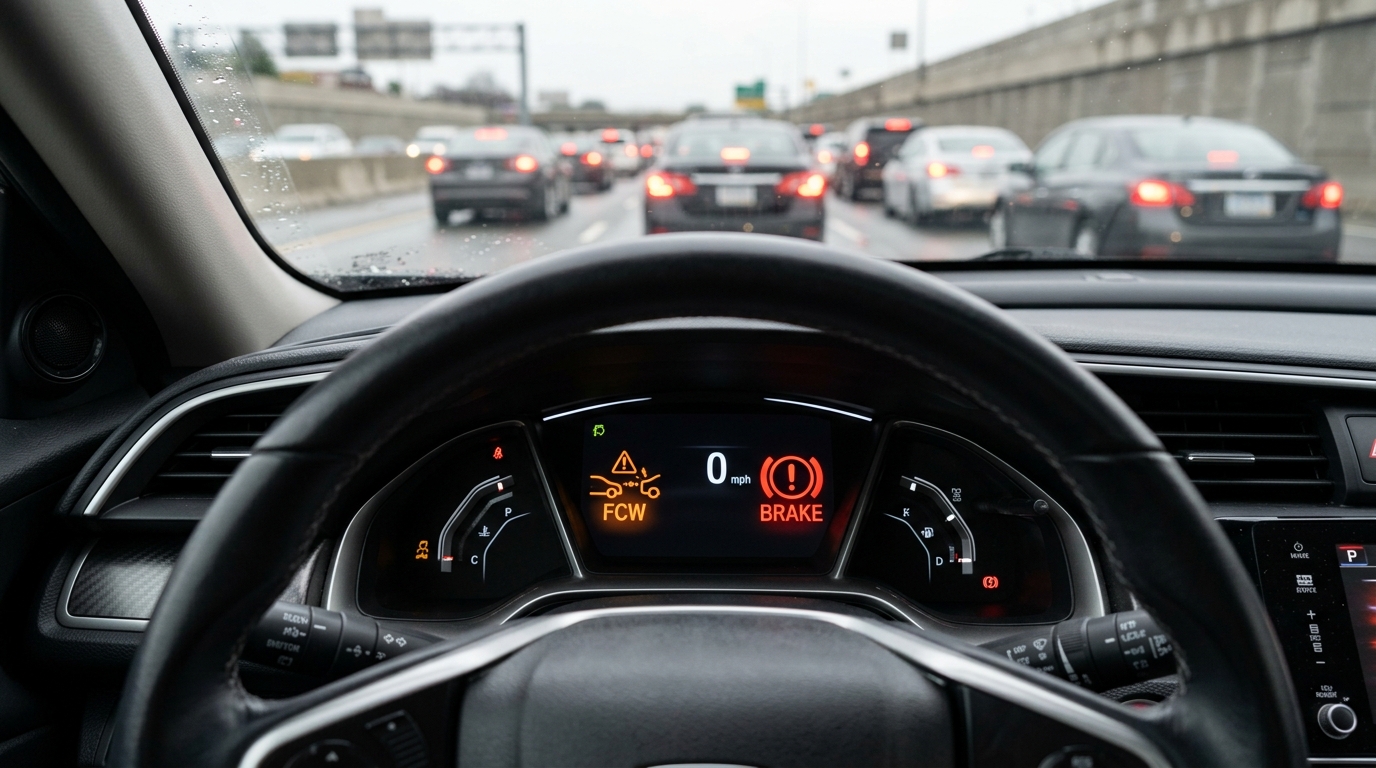
Automatic emergency braking is designed to assist the driver, not replace the driver. That distinction matters in personal injury claims. A driver still has a legal duty to watch the road, control speed, maintain a safe following distance, and react to hazards. A driver cannot simply rely on the vehicle to fix every mistake.
At the same time, technology cannot be ignored. If a vehicle was marketed as having crash-prevention features, the performance of those features may become relevant. The claim may examine whether the system warned the driver, whether it braked, whether it disengaged, and whether the manufacturer clearly explained its limits. If the system failed in a way that increased the risk of injury, the case may involve more than ordinary driver negligence.
For readers who want official background on this technology, the NHTSA automatic emergency braking safety rule explains why AEB and pedestrian AEB are important parts of vehicle safety policy.
No braking, late braking, or sudden braking can all matter
Automatic emergency braking accident claims may involve several different failure patterns. In some crashes, the system may not brake at all before impact. In others, it may brake too late to avoid the collision. Some claims involve sudden braking when the driver did not expect it, causing a rear-end crash, loss of control, or multi-vehicle chain reaction.
Each pattern raises different legal questions. No braking may suggest driver distraction, sensor failure, system limitation, or a disabled feature. Late braking may show that the vehicle detected the hazard but did not respond fast enough. Sudden braking may require a review of whether the system misread the road environment. The answer cannot be guessed from the damage alone.
Who may be liable when automatic braking fails?
Liability depends on what caused the crash. The human driver may be responsible if they were speeding, distracted, impaired, fatigued, following too closely, or ignoring the road. Even with AEB, drivers are expected to remain alert and ready to brake. If a driver looked at a phone, watched the infotainment screen, or trusted the system too much, that conduct may support a negligence claim.
A vehicle manufacturer may come under scrutiny if the automatic braking system failed to perform as reasonably expected. A case may review design choices, software behavior, sensor placement, driver warnings, system limitations, known defects, and recall history. If the vehicle had prior complaints or safety investigations, those records may become important.
Other parties may also matter. A repair shop may be relevant if cameras, radar, sensors, brakes, or calibration work were handled improperly. A rental company, rideshare company, delivery company, or fleet owner may be responsible if it failed to maintain the vehicle or ignored known safety problems. Another driver may share fault if they created the hazard by cutting across traffic, stopping suddenly, failing to yield, or driving recklessly.
Driver attention and system warnings should be reviewed
Driver attention is one of the biggest issues in automatic emergency braking accident claims. AEB may warn the driver before applying the brakes, but warnings only help if the driver sees or hears them. If the driver was distracted, the warning may not prevent the crash. If the warning was unclear, delayed, or easy to miss, the system design may become part of the case.
System warnings can also help reconstruct the timeline. A warning before impact may show that the vehicle detected danger. No warning may raise questions about whether the system was active, blocked, disabled, malfunctioning, or outside its operating limits. This is why dashboard photos, owner app records, service records, and vehicle data should be preserved as early as possible.
How Injured People Can Protect An AEB Accident Claim
The first steps after a crash still matter. Get medical help, call law enforcement, document the scene, and exchange information. If anyone is seriously injured, safety and emergency care should come first. Once the immediate danger is handled, evidence preservation becomes critical.
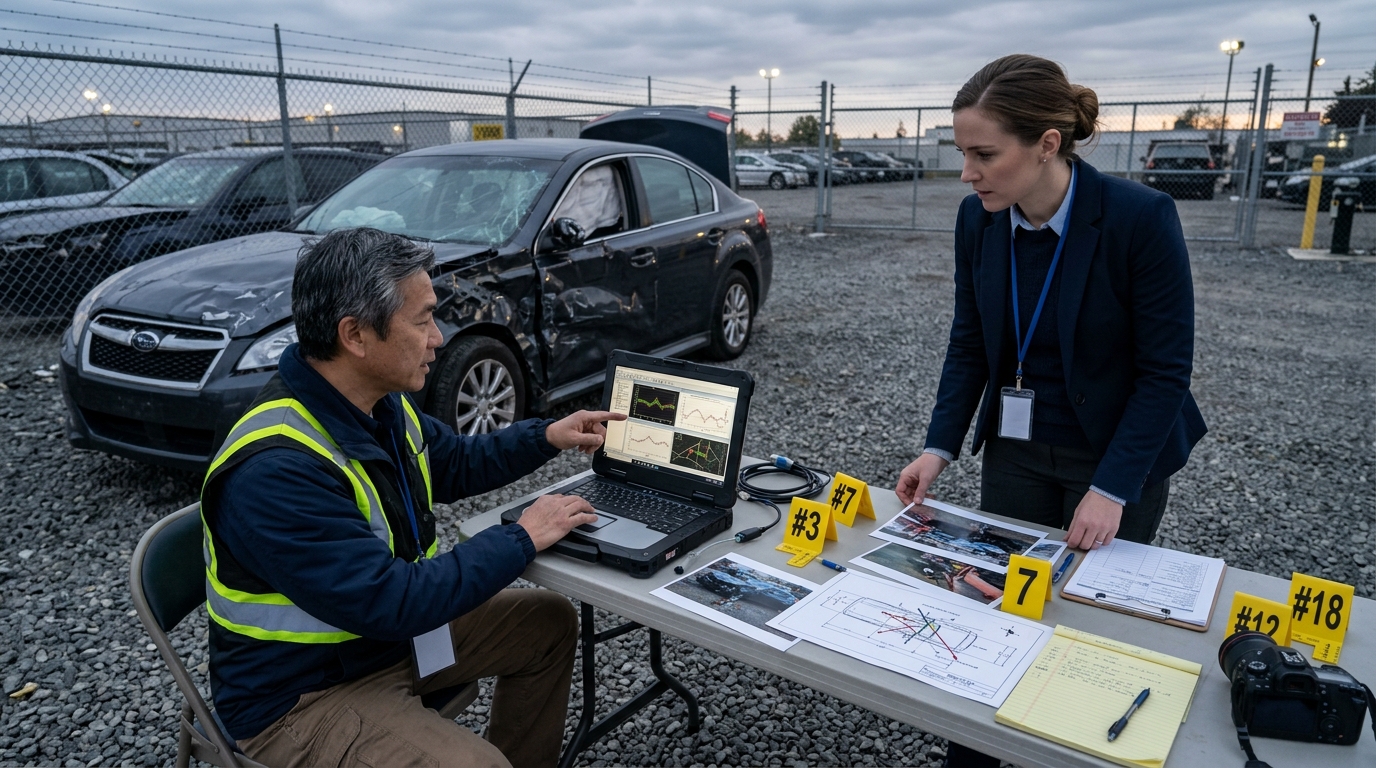
Automatic emergency braking accident claims can be weakened when vehicles are repaired, sold, salvaged, or destroyed before the data is reviewed. Sensors may be replaced. Bumpers may be repaired. Cameras may be recalibrated. Software may be updated. The vehicle may disappear into an insurance storage yard. Once that happens, it may be harder to prove what the technology did before impact.
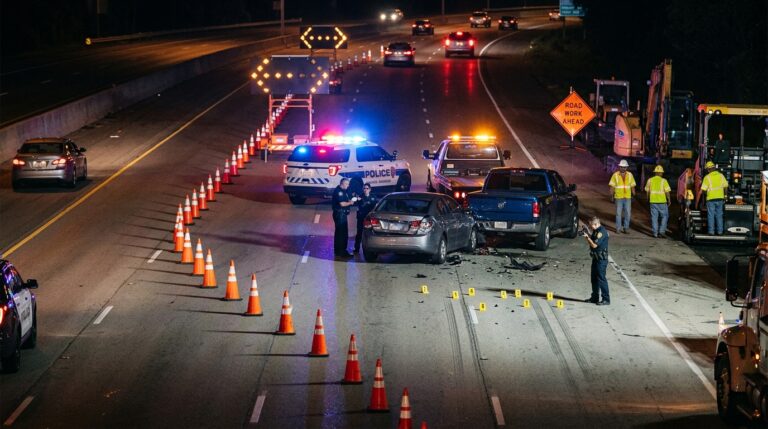
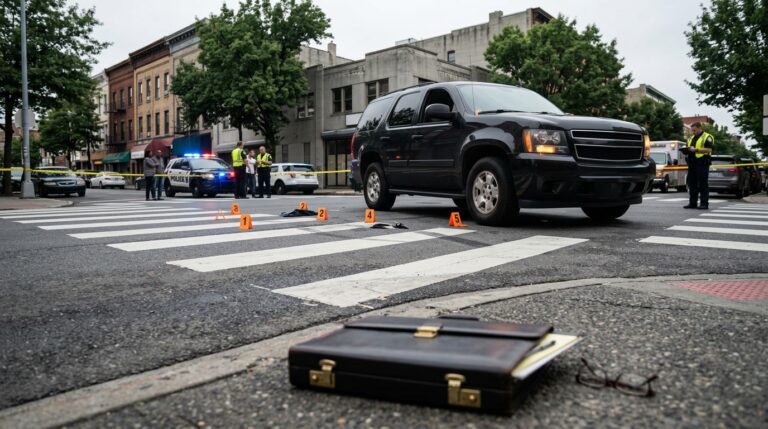
Helpful evidence may include photos of the scene, vehicle damage, skid marks, road signs, traffic signals, lane markings, weather conditions, dashboard alerts, and warning lights. Witnesses may describe whether the vehicle slowed, braked suddenly, failed to stop, drifted, or showed no reaction before impact. Dashcam footage, surveillance video, police bodycam footage, traffic camera footage, and nearby business cameras may also help.
Evidence that can decide an AEB accident claim
Technical evidence can be the difference between a weak claim and a strong one. Important records may include event data recorder information, brake application data, throttle input, speed, steering input, forward collision warnings, AEB activation records, sensor status, software version, maintenance history, repair records, recall notices, inspection records, and owner manual warnings.
If the vehicle was part of a business fleet, more records may exist. Delivery companies, rideshare platforms, rental companies, and commercial fleets may have telematics, route data, driver schedules, vehicle inspection logs, app records, and internal safety policies. These records can show whether the vehicle was maintained, whether the driver was rushed, and whether similar safety problems happened before.
Medical records are just as important. Vehicle data may explain how the crash happened, but medical documentation explains how the crash harmed the injured person. Victims should keep emergency room records, imaging results, therapy notes, medication receipts, follow-up appointments, work restriction notes, and lost wage records. Neck injuries, back injuries, concussions, shoulder injuries, nerve symptoms, and soft tissue injuries may worsen after the first day.
Vehicle data should be preserved before repairs
Do not assume the insurance company will preserve all useful data. Insurers often move quickly to inspect damage, estimate repair costs, and close files. That process may not protect the evidence needed for an AEB claim. If the crash involved serious injuries, disputed fault, a fatality, heavy vehicle damage, or unclear braking behavior, the vehicle should be preserved before major repairs or disposal.
A preservation request may help protect evidence by notifying the other driver, insurer, storage yard, repair shop, rental company, employer, or fleet operator that vehicle data and physical evidence should not be destroyed. This step can be especially important when the other party controls the vehicle that may contain the most important records.
Insurance companies may oversimplify the crash
Insurance companies often prefer a simple explanation. They may blame the driver, the injured person, road conditions, or unavoidable circumstances. In automatic emergency braking accident claims, that simple version may miss key evidence. A crash can involve driver negligence and technology failure at the same time.
Comparative fault may also become an issue. The insurer may argue that the injured person stopped too quickly, crossed unsafely, changed lanes poorly, or failed to avoid the crash. PI-Pedia’s guide on comparative negligence in car accident cases explains how fault can be divided and how that division may affect compensation.
Compensation may include emergency treatment, hospital bills, surgery, physical therapy, chiropractic care, medication, lost income, reduced earning ability, pain and suffering, emotional distress, property damage, and out-of-pocket expenses. Severe crashes may involve long-term care, permanent impairment, or wrongful death issues.
The bottom line is direct. Automatic braking does not mean automatic liability, and it does not erase driver responsibility. However, it can change the evidence, the parties involved, and the legal strategy. Injured victims should avoid quick assumptions, preserve vehicle data, document medical treatment, and look closely at both human conduct and vehicle technology before accepting any settlement.